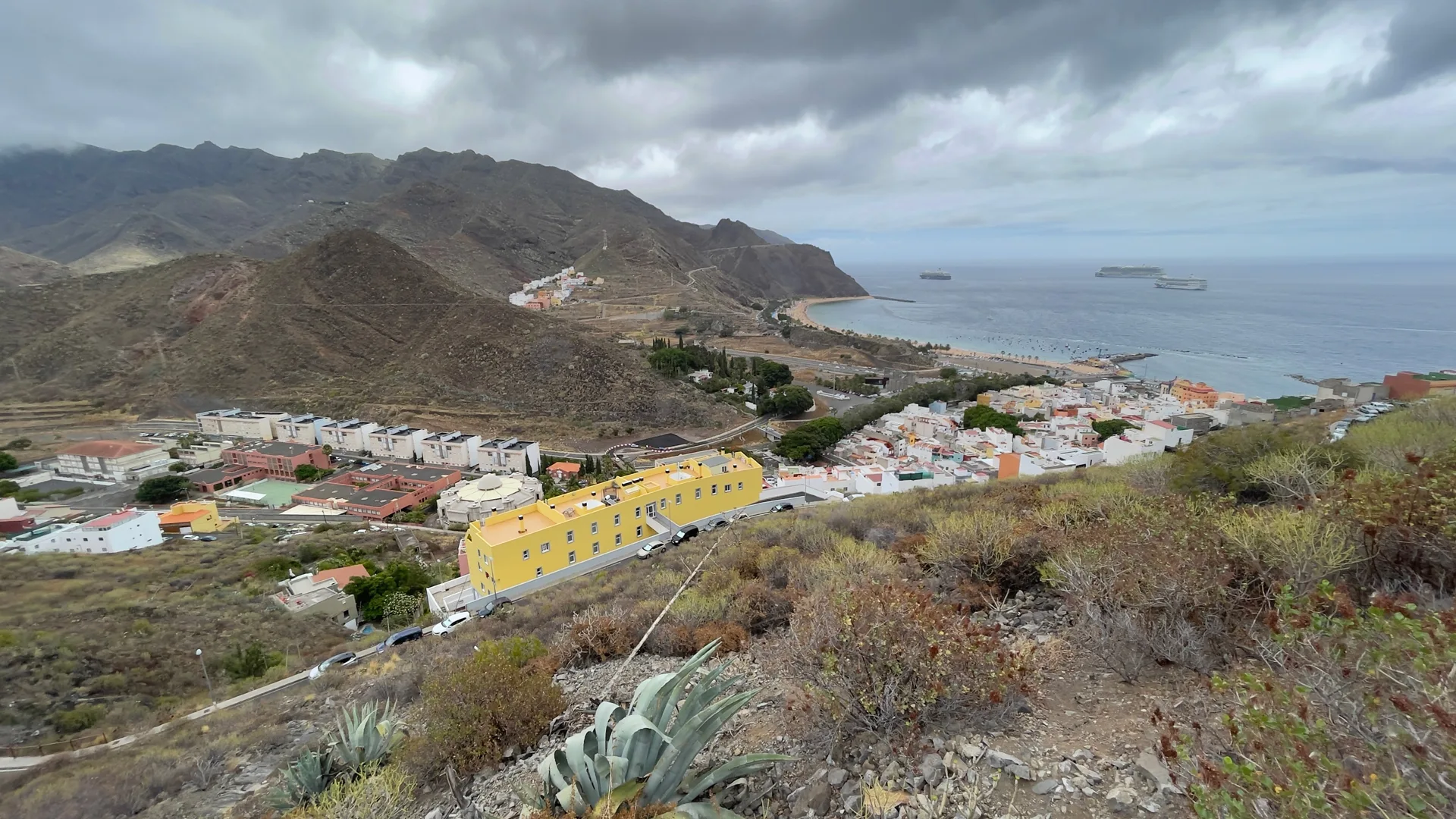
Tenerife is often described as a paradise island: volcanoes, beaches, forests, cliffs, dolphins, sunshine and dramatic landscapes in every direction.
But there is another question more and more people are asking before visiting: is Tenerife overpopulated?
It is a sensitive question, but also a fair one. Many visitors notice heavy traffic in the south, busy beaches in peak season, crowded viewpoints around Teide, and towns where tourism, local life and international residents all mix together.
At the same time, Tenerife is not just a holiday destination. It is home to almost one million people, with schools, hospitals, workers, families, farmers, small businesses and local communities who live here all year round.
So the real answer is not simply yes or no.
Tenerife is not crowded everywhere. But in certain areas, especially the tourist zones and main roads, the island can feel extremely busy.
Let us look at the real numbers.
How Many People Live in Tenerife?
According to official INE population data, Tenerife had 966,469 residents in 2025.
That makes it the most populated island in the Canary Islands. The same INE dataset lists Gran Canaria at 875,589 residents in 2025, which means Tenerife is clearly the largest island by population in the archipelago.
The total population of the Canary Islands in the same 2025 island dataset is around 2.26 million people, so Tenerife alone represents roughly 43% of the population of the entire Canary Islands.
That is a huge concentration for one island.
But the important detail is this: Tenerife population is not spread evenly.
A large part of the population is concentrated around the metropolitan area of Santa Cruz de Tenerife and La Laguna in the north-east, while the south of the island has grown massively because of tourism, international residents and service-sector jobs.
So when people ask whether Tenerife is overpopulated, they are often reacting to specific zones: Costa Adeje, Playa de las Americas, Los Cristianos, Las Chafiras, San Isidro, the TF-1 motorway and popular tourist spots.
Tenerife Is Not Just a Small Island With Tourists
Tenerife has a surface area of around 2,034 km2, but not all of that land is easy to live on or build on.
The island is volcanic, mountainous and protected in many areas. Teide National Park, pine forests, ravines, cliffs and agricultural land all limit where people can actually live.
This is why population density on paper does not fully explain the feeling on the ground.
On a map, Tenerife may look spacious. In reality, much of daily life is concentrated in narrow coastal corridors, valleys, urban zones and motorway routes.
That is why the island can feel relaxed in places like Anaga, Vilaflor, Teno, El Tanque or some rural northern areas, but extremely busy in parts of the south and around the main tourist infrastructure.
Why Does Tenerife Feel So Crowded?
The answer is simple: Tenerife has two populations at the same time.
First, there is the resident population: people who live here permanently.
Second, there is the floating population: tourists, seasonal visitors, remote workers, temporary workers, second-home owners and people staying for weeks or months.
In 2025, Tenerife received 7,412,046 tourist arrivals according to FRONTUR data published by Promotur and ISTAC.
Across the Canary Islands, the 2025 figure was 18,386,274 tourist arrivals.
That means Tenerife receives many times its resident population in visitors every year.
This does not mean seven million people are on the island at the same time. But it does mean that roads, beaches, restaurants, excursions, accommodation, viewpoints and coastal towns are under constant pressure throughout the year.
Unlike many European destinations, Tenerife does not have only one short summer season. Thanks to its climate, tourism continues in winter, spring, summer and autumn.
That is great for the economy, but it also means the island rarely gets a complete rest.
The South Feels Busier Than the North
One of the most important things to understand about Tenerife is the difference between the south and the north.
The south is where many visitors stay: Costa Adeje, Playa de las Americas, Los Cristianos, Golf del Sur, El Medano and surrounding areas.
This part of the island is sunny, dry and built around tourism, beaches, hotels, apartments, excursions, restaurants and nightlife.
The north is greener, more local and more traditional. Places like La Orotava, Puerto de la Cruz, Garachico, Icod de los Vinos, La Laguna and Anaga feel very different.
There is tourism there too, but it is not the same type of tourism as in the south.
This is why two people can visit Tenerife and have completely different opinions.
One person stays in Costa Adeje in August and says Tenerife is too crowded.
Another person explores Anaga, Garachico and the rural north and says Tenerife still feels wild and authentic.
Both can be right.
Tourism Is Part of the Island Economy
Tourism is not just something that happens in Tenerife. It is one of the main engines of the island economy.
The Canary Islands received 18,386,274 tourist arrivals in 2025, while total tourist turnover reached 23.185 billion euros, according to official Canary Islands Tourism Observatory figures.
For Tenerife, Promotur and FRONTUR data for 2025 shows 7,412,046 tourist arrivals. The same reporting also shows that the UK, Germany and mainland Spain remain among the most important source markets for the island.
This creates jobs, supports restaurants, excursions, hotels, taxi drivers, guides, shops, boat companies, diving schools, paragliding pilots, car rental companies and thousands of families.
But it also creates pressure.
The challenge is not whether tourism should exist. Tourism is deeply connected to Tenerife economy. The real question is how to make tourism better, more respectful and more balanced.
Is Tenerife Suffering From Overtourism?
In some areas, yes, Tenerife is clearly experiencing symptoms of overtourism.
- heavy traffic on main roads, especially the TF-1;
- pressure on housing and long-term rentals;
- crowded tourist zones;
- pressure on natural areas;
- tension between residents and tourism development;
- too many visitors concentrated in the same places at the same times.
But it is also important to be precise. Tenerife is not destroyed. It is not one giant crowded resort.
The island still has quiet villages, empty trails, hidden viewpoints, peaceful forests, local restaurants and authentic corners.
The problem is concentration.
Too many visitors go to the same places: Teide viewpoints, Los Gigantes, Masca, Costa Adeje, Los Cristianos, Siam Park, Puerto Colon and a few famous beaches.
Better tourism means spreading people more intelligently, respecting local life and encouraging visitors to explore with awareness.
Why Visitors Should Care
Some tourists think population and overtourism are local problems that do not affect them.
But they do.
If the island is under pressure, visitors feel it too:
- more traffic;
- harder parking;
- more expensive accommodation;
- crowded beaches;
- lower-quality tourist-trap experiences;
- frustrated locals;
- less authentic travel.
A better visitor experience starts with understanding the island as a real place, not just a holiday product.
Tenerife is beautiful because it is alive. It has culture, history, nature, villages, agriculture, mythology, protected spaces and local communities.
Visitors who respect that usually have a much better experience.
How to Visit Tenerife More Responsibly
You do not need to avoid Tenerife. You just need to visit better.
1. Explore Beyond the Obvious Places
Do not only stay between Costa Adeje and Los Cristianos. Visit the north, rural villages, forests, local markets and lesser-known coastal towns.
2. Book Smaller and Better Experiences
Instead of choosing the cheapest mass-market option, look for experiences that are well organised, respectful and suitable for your needs.
3. Avoid Peak Hours
Teide, Masca, Los Gigantes and popular beaches are much more enjoyable early in the morning or later in the day.
4. Respect Local Communities
Do not block roads for photos, park badly, enter private land or treat villages like theme parks.
5. Spend Money Locally
Local restaurants, small shops, family-run activities and independent providers help keep the benefit of tourism closer to the island.
So, Is Tenerife Overpopulated?
Tenerife is not overpopulated in the same way everywhere.
The island has almost one million residents and receives millions of visitors every year. That creates real pressure, especially in the south, on roads, housing and popular tourist areas.
But Tenerife is also large, diverse and full of contrast. It still has wild mountains, quiet forests, traditional towns and places where you can feel the true soul of the island.
The problem is not that people visit Tenerife.
The problem is when too many people visit the same places, in the same way, without understanding the island they are stepping into.
Tenerife does not need less appreciation.
It needs better travel.
FAQ
How many people live in Tenerife?
Tenerife had 966,469 residents in 2025, according to official INE population data.
Is Tenerife the most populated Canary Island?
Yes. Tenerife is the most populated island in the Canary Islands, ahead of Gran Canaria.
Why does Tenerife feel so crowded?
Tenerife feels crowded because it has a large resident population and receives millions of tourists every year. The pressure is especially visible in the south, on main roads and around famous attractions.
Is the north of Tenerife less crowded?
Generally, yes. The north can still be busy in towns like Puerto de la Cruz or La Laguna, but it usually feels more local, greener and less tourist-saturated than the south.
Is Tenerife still worth visiting?
Yes. Tenerife is absolutely worth visiting, especially if you explore beyond the most obvious tourist zones and choose experiences that respect the island, its nature and its communities.
Fact-Checking Sources
Share this article