South Tenerife is usually the first Tenerife that visitors meet. It is sunny, easy, practical and built for holidays.
You land at Tenerife South Airport, drive past dry volcanic hills, arrive at your hotel or apartment, and suddenly everything is simple: beaches, restaurants, boat trips, shopping centres, nightlife, pools, taxis, English menus and sunshine almost every day.
For many people, that is exactly what they want. And there is nothing wrong with that. Costa Adeje, Playa de las Americas and Los Cristianos are popular for a reason. They are convenient, warm, active and full of things to do.
But here is the question many travellers only ask after a few days on the island:
Is South Tenerife the real Tenerife?
The honest answer is: yes and no.
South Tenerife is part of the island's story. It is where tourism became one of Tenerife's biggest economic engines. It is where millions of visitors sleep, eat, swim, book excursions and create holiday memories.
But it is not the whole island. If you only stay in the southern resort zone, you may leave Tenerife without ever seeing its deeper personality.
Because Tenerife is not just a beach destination. It is a volcanic island with ancient forests, historic towns, rural villages, black-sand beaches, banana plantations, cloud-covered mountains, dramatic ravines, local food, Guanche heritage and landscapes that change completely within one hour of driving.
Why South Tenerife Is So Popular
South Tenerife works because it gives visitors exactly what they usually need from a holiday: sun, comfort and easy logistics.
The south is generally drier and sunnier than the north. It has large hotel zones, tourist apartments, beaches, beach clubs, shopping areas, international restaurants and many activity departure points.
If you are staying in Costa Adeje, Los Cristianos or Playa de las Americas, you can book whale watching, jet ski, paragliding, Siam Park, boat trips, diving, buggy tours and Teide excursions without needing to organise complicated transport.
Official tourism information describes Playa de las Americas, between Arona and Adeje, as an area with a huge range of seafront bars, restaurants, cafes and nightclubs, while the wider southern coast offers beaches, diving, surfing and hidden bays.
In other words, the south is designed to make holidays easy.
That convenience is powerful. It is also why many visitors never leave the south.
The Problem: Easy Tenerife Can Become Small Tenerife
There is a risk when a place becomes too convenient: visitors stop exploring.
A tourist can spend a full week between the pool, beach, shopping centre, hotel buffet and a couple of commercial excursions. They may enjoy the holiday, but they can return home thinking Tenerife is only resorts, motorways and sunny terraces.
That is like visiting Spain and only seeing the airport and a hotel pool. It is still a trip, but it is not the whole story.
The real magic of Tenerife often appears when you leave the obvious route. It appears in the green mountains of Anaga, the old streets of La Laguna, the lava pools of Garachico, the pine forests around Teide, the cliffs of Teno, the vineyards of the north, the quiet plazas of rural villages and the wild beaches where the Atlantic feels stronger than the tourist brochure.
What People Mean by "The Real Tenerife"
The phrase "real Tenerife" can be problematic if used badly. South Tenerife is real too. People live and work there. Families grow up there. Local communities exist there alongside tourism.
But when travellers talk about the real Tenerife, they usually mean the parts of the island where tourism is not the only thing shaping the atmosphere.
They mean places where you still feel the island's older rhythm: agriculture, fishing, mountain villages, Canarian architecture, local bars, traditional food, old roads, volcanic history and landscapes that have not been polished into a resort experience.
The real Tenerife is not one place. It is a layer of the island that becomes visible when you slow down.
Anaga: The Green Tenerife Many Visitors Never See
If South Tenerife is sun and dry volcanic coast, Anaga is the opposite: green, misty, ancient and dramatic.
Anaga Rural Park is in the north-east of Tenerife and is one of the island's most important natural areas. Official tourism sources describe it as an area of major ecological value, with special biodiversity, traditional activities and Biosphere Reserve status.
The landscape is full of sharp peaks, deep ravines, laurel forest and small hamlets.
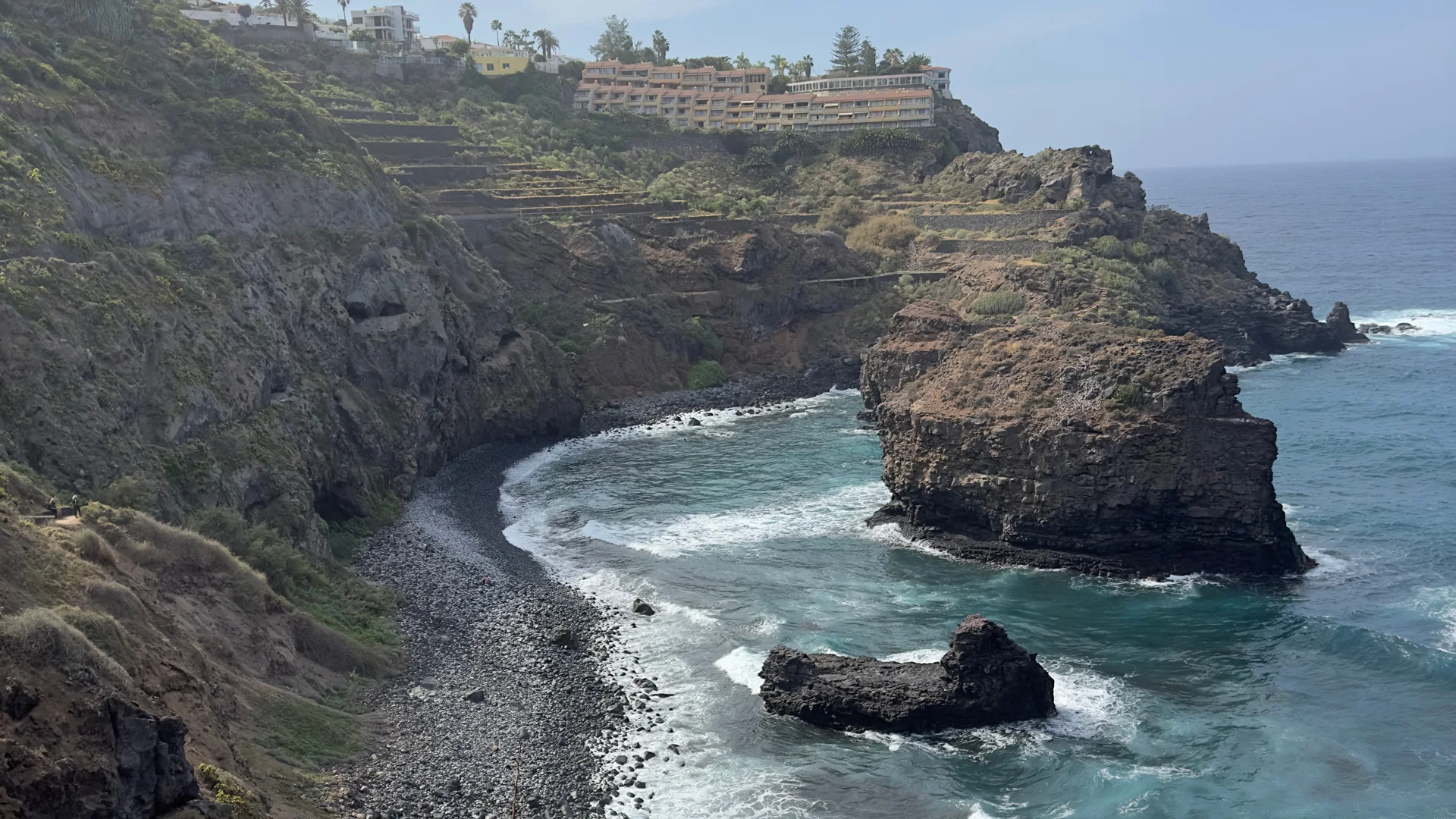
For many visitors, Anaga feels shocking because it does not match the Tenerife they imagined. There may be clouds, wet roads, cool air, forest paths and black-sand beaches beneath cliffs. It feels more like an ancient Atlantic world than a classic holiday resort.
Places like Cruz del Carmen, Taganana, Benijo and the Anaga mountain roads show a completely different side of the island. This is where Tenerife stops feeling like a package holiday and starts feeling like a living landscape.
La Laguna: Tenerife With History, Not Just Hotels
San Cristobal de La Laguna is one of the best places to understand that Tenerife has deep cultural history.
La Laguna is a UNESCO World Heritage city, known for its historic urban layout, colourful streets, courtyards, churches, university atmosphere and old Canarian houses. It feels nothing like Costa Adeje or Los Cristianos.
This is the kind of place where you walk slowly. You sit for coffee. You notice balconies, wooden doors, students, locals, rain, old stone and a different rhythm.
If South Tenerife is about holiday energy, La Laguna is about memory.
For visitors who want more than beaches, La Laguna is essential.
Garachico: The Beauty of Lava and Recovery
Garachico is one of the most beautiful towns in Tenerife, and one of the best examples of how volcanic history shaped the island.
In 1706, lava from the Trevejo or Montana Negra eruption changed the destiny of the town. Today, visitors know Garachico for its natural lava pools, historic streets, ocean views and calm atmosphere.
It is a perfect contrast to the south. There are no giant resort blocks dominating the experience. Instead, you get old architecture, volcanic coastline, local life and the sense that the island has survived and adapted through powerful natural events.
Garachico is not just pretty. It tells a story.
Teide: The Heart of the Island
You cannot talk about the real Tenerife without talking about Teide.
Teide National Park is not only a famous attraction. It is the geological heart of Tenerife. UNESCO describes the Teide-Pico Viejo volcanic structure as rising to 3,718 metres above sea level, making it the highest summit in Spain.
The landscapes around Teide are some of the most powerful in the Canary Islands: lava fields, red rock, crater views, pine forests, strange formations and the feeling of standing inside the island's volcanic origin.
Many visitors go to Teide quickly, take photos and return to the hotel. But Teide deserves more attention. Sunset, stargazing, geology, altitude, silence and scale all change the experience.
Teide is not just something to see. It is something to understand.
Teno, Masca and the Western Edge
The west and north-west of Tenerife offer another version of the island: cliffs, ravines, remote roads and dramatic views.
Teno Rural Park, Buenavista del Norte, Punta de Teno and Masca show Tenerife at its most cinematic. This area is not always easy to access, and some routes require planning, but that is part of why it feels different.
Masca is famous, sometimes too famous, but it remains spectacular when visited with realistic expectations. The road can be narrow and busy, parking can be difficult, and it is not a place to rush.
The best experience comes when you treat it as a mountain village, not a quick photo stop.
Should You Stay in the South or Explore Beyond It?
For most first-time visitors, staying in the south still makes sense. The weather is reliable, the airport is close, the beaches are accessible and activity logistics are easy.
But staying in the south should not mean only seeing the south.
A smart Tenerife trip uses the south as a comfortable base and then explores the wider island. One day for Teide. One day for Anaga and La Laguna. One day for Garachico or Teno. One day for the ocean. One day for slow local food and villages.
That kind of trip gives you the best of both worlds: comfort and depth.
How to Avoid Missing the Island
1. Leave the resort zone at least twice
Even if your hotel is perfect, plan at least two days outside the southern tourist corridor. Otherwise, you may miss the contrast that makes Tenerife special.
2. Do not judge Tenerife by one town
Costa Adeje, Las Americas, Los Cristianos, Puerto de la Cruz, La Laguna, Garachico and Taganana all feel different. Tenerife is not one mood.
3. Respect the weather differences
The south may be sunny while the north is cloudy or rainy. That does not mean the north is worse. It is exactly why it is green.
4. Do not overplan one day
Tenerife looks small, but roads, mountains, parking and traffic change everything. Trying to see Teide, Masca, Garachico, La Laguna and Anaga in one day is not exploring. It is collecting stress.
5. Eat somewhere that does not look made only for tourists
Try local food, guachinches, small bars, Canarian potatoes, mojo, grilled cheese, gofio, local fish or simple village restaurants. Food is one of the easiest ways to feel the island beyond the resort.
The Best Tenerife Trip Has Contrast
The strongest Tenerife itinerary is not south instead of north, or resorts instead of villages. It is contrast.
Beach and volcano. Pool and pine forest. Catamaran and historic city. Resort comfort and rural road. Sunset terrace and misty Anaga trail. Black-sand beach and golden tourist beach. Local food and international restaurants.
That contrast is what makes Tenerife more than a simple sun destination.
Final Answer: Are You Missing the Island?
If you stay only in South Tenerife, you are not doing anything wrong. You can have a great holiday there.
But yes, you may be missing the island.
You may be missing the green mountains, old towns, volcanic history, rural villages, black beaches, local food, cloud forests and quiet corners that make Tenerife feel unique.
South Tenerife is the easy introduction.
The real adventure begins when you let the island become bigger than your resort.
FAQ
Is South Tenerife worth visiting?
Yes. South Tenerife is worth visiting because it has reliable weather, beaches, restaurants, nightlife, excursions and easy logistics. It is especially practical for first-time visitors.
What is the real Tenerife?
The real Tenerife is not one specific place. It is the wider island beyond the resort zones: local towns, mountain villages, forests, volcanic landscapes, traditional food, historic streets and natural areas.
Is North Tenerife better than South Tenerife?
Not necessarily. The north and south are different. The south is sunnier and more tourist-oriented. The north is greener, more traditional and often more cultural. The best trip includes both.
Can I stay in the south and still explore the real Tenerife?
Yes. Many visitors stay in the south for convenience and take day trips to Teide, Anaga, La Laguna, Garachico, Teno or Masca.
What places show the authentic side of Tenerife?
Good examples include Anaga, La Laguna, Garachico, La Orotava, Icod de los Vinos, Taganana, Teno, Vilaflor, Buenavista del Norte and smaller local villages away from the main resort areas.
How many days do I need to see more than the south?
With 5 to 7 days, you can enjoy the south and still visit Teide, one northern historic town, one green nature area and one traditional coastal or mountain village.
Fact-Checking Sources
Share this article