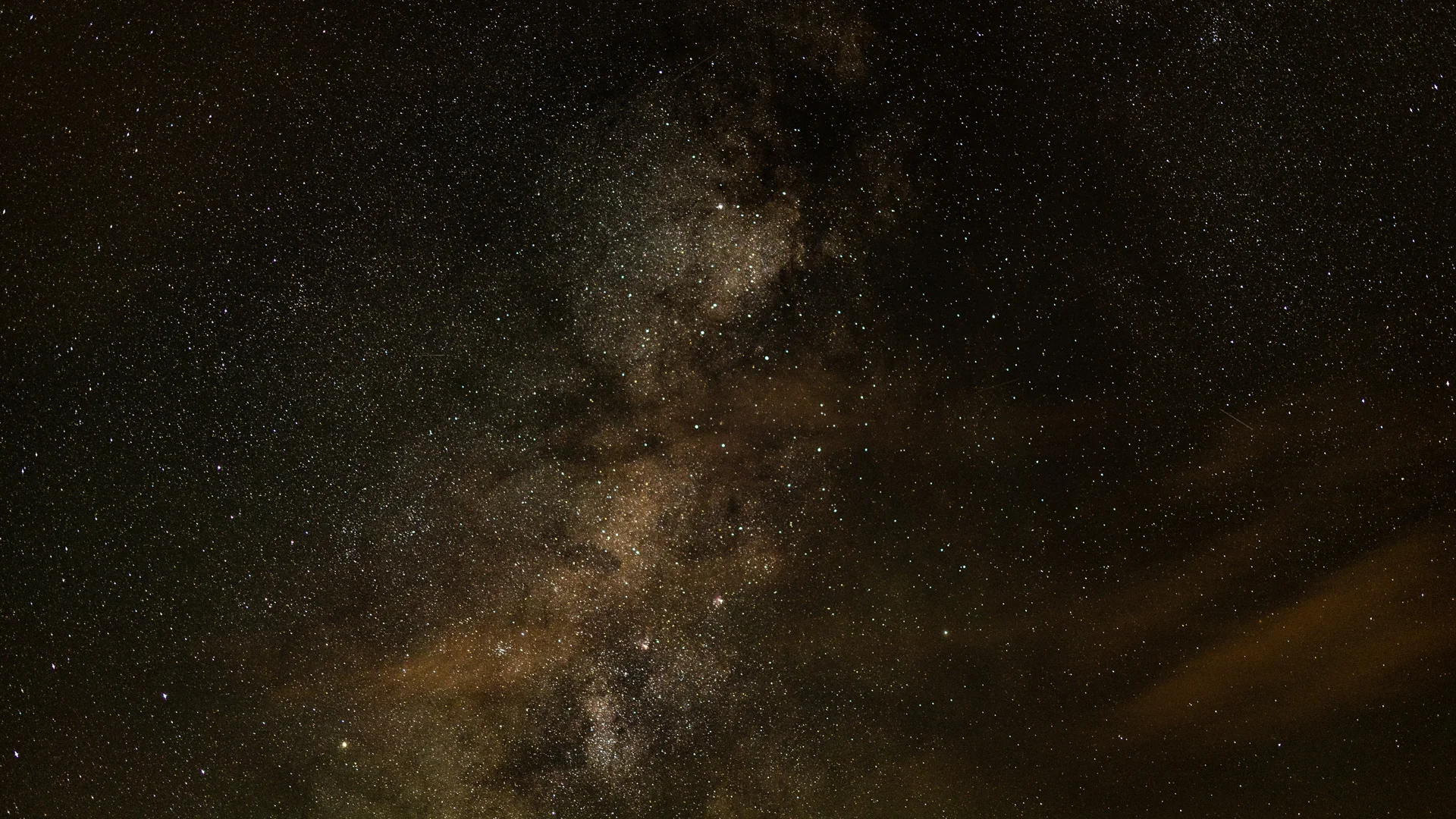
When the sun disappears behind the Atlantic horizon, Tenerife quietly transforms.
Beach towns glow with nightlife and music, but high above the island another world begins to reveal itself.
At altitudes above 2,000 meters the sky becomes extraordinarily clear. The air is dry, the light pollution disappears, and the stars seem almost close enough to touch.
Tenerife is officially recognized as a Starlight Destination and is home to one of the most important solar observatories in the world.
For astronomers and travelers alike, the island offers some of the best stargazing conditions anywhere in Europe.
At Banana Ventura we believe that watching the Milky Way from a volcanic landscape is more than just sightseeing — it feels almost spiritual.
Here are some of the best places on the island to experience the night sky.
1. Mount Teide National Park – The Iconic Stargazing Location
Mount Teide is the most famous stargazing destination in Tenerife for a reason.
The national park sits high above the clouds, far away from the light pollution of the coast. The volcanic landscape creates a dramatic foreground for astrophotography, and the clear air allows incredible visibility.
Roques de García is one of the most popular places to watch the stars rise above the volcanic formations.
Nearby, Llano de Ucanca offers a wide open plain where photographers often set up tripods to capture the Milky Way stretching across the sky.
Standing here at night feels almost like standing on another planet.
Best for: First-time stargazers, astrophotography, iconic volcanic landscapes
Altitude: 2,000+ meters
Pro tip: Combine your stargazing with sunset views for a complete evening experience
2. Mirador de Chipeque – The Sea of Clouds
Located on the ridge of the Esperanza forest, Mirador de Chipeque offers one of the most magical viewpoints on the island.
On many nights a thick layer of clouds covers the lower part of Tenerife. From this viewpoint you stand above that cloud layer, looking across a glowing white ocean of clouds.
This natural "cloud carpet" blocks most of the city lights below, making the stars appear even brighter.
The combination of silence, pine forests, and an endless sky full of stars makes Chipeque one of the most romantic stargazing locations on the island.
Best for: Romantic evenings, cloud layer views, pine forest atmosphere
Location: Esperanza forest ridge
Pro tip: Visit on nights when the cloud layer is forecast for the most dramatic views
3. Masca Viewpoint – Wild and Untouched Skies
The mountainous region around Masca is famous for its dramatic scenery and winding roads.
At night, however, the area becomes incredibly peaceful. The Mirador de Cherfe viewpoint offers a dark sky and panoramic views across the ocean.
From here you can often see the silhouette of the neighboring island of La Gomera resting on the horizon beneath a canopy of stars.
The atmosphere feels remote and wild, far away from modern cities and noise.
Best for: Remote atmosphere, ocean views, seeing La Gomera at night
Location: Teno Mountains (northwest Tenerife)
Pro tip: The road can be challenging; consider joining a guided tour if you're not comfortable driving mountain roads at night
4. Izaña – Where Science Meets the Stars
High in the mountains near Teide lies the Izaña Observatory, one of the most important astronomical research centers in Europe.
Although visitors cannot freely access the scientific telescopes at night, the surrounding area provides some of the clearest skies on the island.
At over 2,300 meters above sea level the atmosphere becomes extremely stable. Because of this, the stars appear less "twinkly" and instead glow with a steady brightness.
It is easy to understand why scientists chose this location to study the universe.
Best for: Crystal-clear skies, minimal atmospheric distortion, serious astronomy enthusiasts
Altitude: 2,300+ meters
Pro tip: Dress very warmly — temperatures can drop significantly at this altitude
What Can You See in Tenerife's Night Sky?
Depending on the time of year, Tenerife's sky offers a variety of celestial highlights.
During the summer months the Milky Way becomes the main attraction, stretching across the sky like a glowing river of stars.
In winter the famous Orion constellation becomes clearly visible along with the Pleiades star cluster, often called the Seven Sisters.
Meteor showers also create spectacular displays. In August the Perseids shower produces dozens of shooting stars per hour, while December's Geminids are often even more intense.
How to Experience Stargazing with Banana Ventura
While it is possible to drive into the mountains yourself, stargazing tours offer a deeper experience.
Professional guides help visitors understand what they are seeing in the sky, pointing out constellations, planets, and distant galaxies.
Many tours include powerful telescopes capable of revealing craters on the Moon, the rings of Saturn, and the moons orbiting Jupiter.
Banana Ventura offers curated stargazing experiences that combine sunset views, warm drinks, and expert explanations of the night sky.
Three Golden Rules for Stargazing
- Check the Moon Phase – The best nights for seeing the Milky Way are near the new moon when the sky is darkest.
- Dress Warmly – Even if the temperature on the coast feels warm, the high mountains can become very cold at night.
- Use Red Light – If you bring a flashlight, use a red light filter. White light ruins night vision and makes it harder to see faint stars.
How to Plan the Best Stargazing in Tenerife
Stargazing in Tenerife works best when you plan around three simple things: altitude, moonlight and clouds. The island often has a sea of clouds below the Teide plateau, which means the coast can look grey while the high mountains are perfectly clear. This is why many of the best stargazing Tenerife experiences start with a drive above the cloud layer before sunset.
If you are looking for good places for stargazing without joining a tour, choose viewpoints where you can park safely, stand away from headlights and avoid blocking narrow roads. Mirador de Chipeque, Boca Tauce and areas around Las Canadas can be excellent, but temperatures drop quickly after dark. Bring layers, water and a small red-light torch so your eyes stay adjusted to the darkness.
The stars in Tenerife are most impressive around the new moon, when the sky is darker and the Milky Way is easier to see. During a bright full moon, the landscape can look magical, but faint stars and deep-sky objects are harder to spot. If your main goal is astrophotography, check both the moon phase and the forecast for high-altitude wind.
Visitors often underestimate the drive back down after midnight. Mountain roads are dark, curvy and sometimes foggy below the cloud layer. A guided stargazing tour solves that problem and usually adds telescopes, constellation stories and local astronomy knowledge, which makes the evening feel much richer than simply standing beside a car park.
For families, the best plan is usually a shorter sunset-and-stars experience rather than a very late night. Children enjoy seeing the first bright planets, the Moon through a telescope and simple constellations they can recognize. Adults who want deeper astronomy should choose a small-group tour with more telescope time and less rushing between stops.
The easiest mistake is to drive to a viewpoint too late, when parking spaces are full and everyone is already using bright phone lights. Arriving before sunset gives you time to settle in, enjoy the color over the clouds and let your eyes adapt gradually as the first stars appear.
For photography, bring a tripod, a charged battery and a wide lens if you have one. Even a phone can work better than expected if it has a night mode and stays completely still. Avoid standing beside cars with headlights on, because one passing beam can ruin several minutes of dark adaptation.
For comfort, pack more clothing than you think you need. Tenerife may feel tropical at the hotel, but stargazing viewpoints can feel like a different season after dark. A hat, warm layer and closed shoes often make the difference between a magical evening and a rushed return to the car.
If clouds cover one area, do not assume the whole island is lost. Tenerife's height creates microclimates, so guides often know alternative viewpoints that still have clear sky. That local flexibility is one of the biggest advantages of booking a proper stargazing experience.
When comparing viewpoints, think about the whole evening rather than only the darkest sky. A place may be excellent for astronomy but awkward for parking, toilets or a late drive with children. The best stargazing spot for your group is the one where everyone can relax long enough for the sky to become part of the memory.
A guided tour also helps you understand what you are seeing. Without context, the sky can feel like a beautiful pattern of lights. With a guide, you start to recognize planets, constellations, star clusters and the shape of the Milky Way, which makes the view feel much more personal.
If you are planning a romantic evening, choose comfort over maximum distance. A sunset stop, warm drink, telescope moment and safe return can be better than chasing the darkest possible lay-by. Tenerife gives you many ways to see the stars; the right one depends on the kind of night you want.
One last detail: check road closures and weather alerts before driving into the mountains. Teide access roads can be affected by wind, ice, forest work or special events. A quick check before leaving the coast saves time and keeps the evening focused on the sky rather than logistics.
Why Choose Banana Ventura for Stargazing
At Banana Ventura we partner with experienced guides and astronomers who are passionate about the night sky.
Our tours focus on small groups, professional telescopes, and comfortable experiences that allow visitors to truly enjoy the magic of the universe.
Because sometimes the most unforgettable moment of a trip is not something you see during the day — but the moment you look up and realize how vast the universe really is.
Ready to witness Tenerife's spectacular night sky? Contact us on WhatsApp at +34 612 451 737 and let's plan your unforgettable stargazing adventure.
Share this article