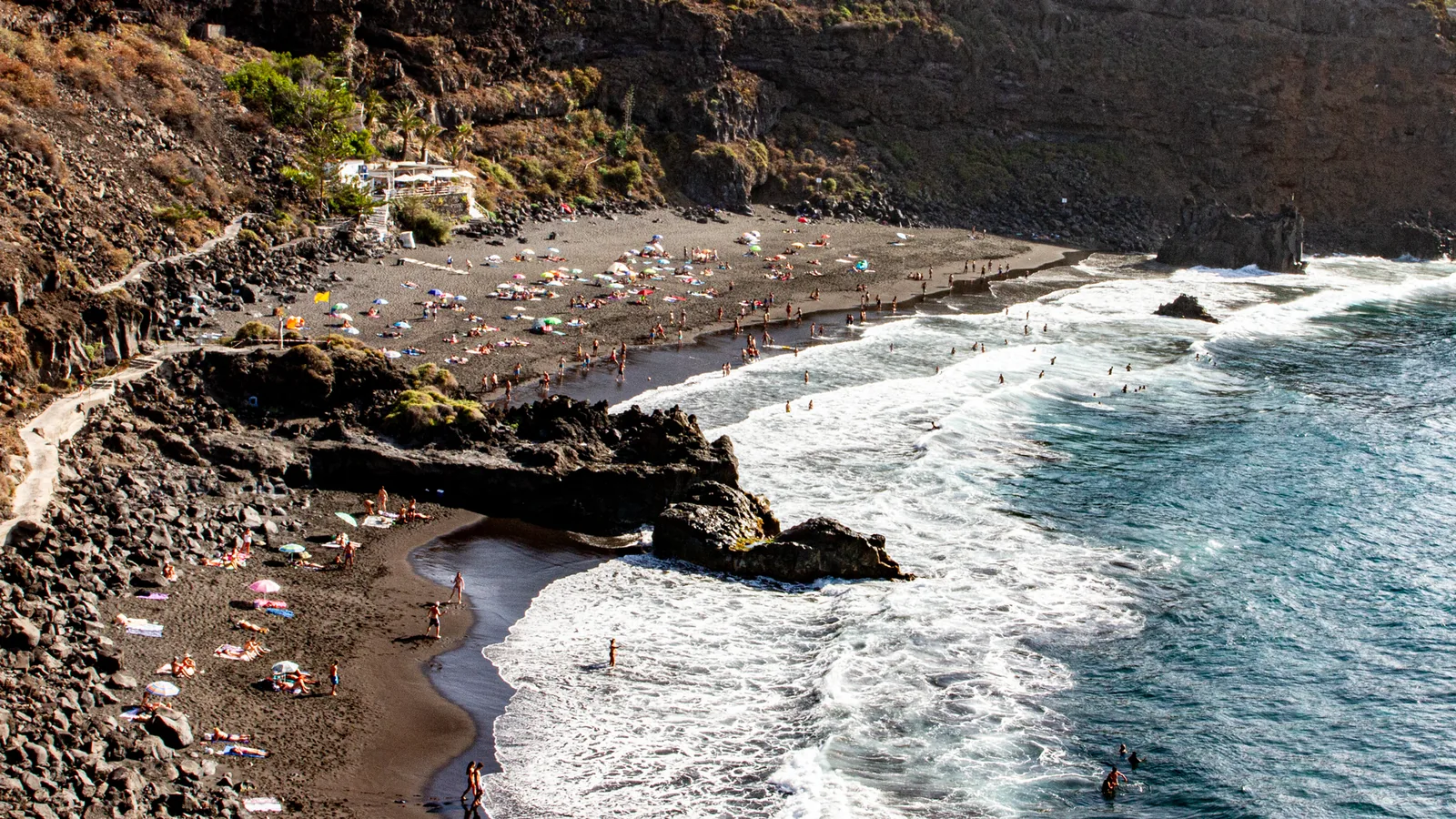
One of the first things many visitors notice in Tenerife is that some beaches do not look like the classic postcard version of the Mediterranean. Instead of pale yellow or white sand, they find something darker, stronger and more dramatic: black sand.
For some travellers, this is a surprise. For others, it becomes one of the most memorable parts of the island. Black sand beaches feel different. They look powerful against the blue Atlantic Ocean, they make the water appear brighter, and they remind you that Tenerife is not just a beach destination - it is a volcanic island.
So why are Tenerife beaches black?
The simple answer is that Tenerife was built by volcanoes. The black sand comes from volcanic rock, lava and basalt that have been broken down over time by the ocean, wind and erosion. What you are walking on is not ordinary beach sand. It is part of the island's geological story.
Tenerife Is a Volcanic Island First
To understand Tenerife's beaches, you first need to understand Tenerife itself. The island was formed by volcanic activity over millions of years, and that volcanic origin is still visible everywhere: Mount Teide, lava fields, cliffs, ravines, natural pools, black rocks and dark coastal sand.
Even when you are relaxing on the beach, you are still surrounded by geology.
Mount Teide, in the centre of the island, is the highest mountain in Spain and the most famous volcanic symbol of Tenerife. Teide National Park is one of the best places to see the creative force of volcanoes on the island, but the coastline tells the same story in a different way. Instead of lava fields, the coast gives you volcanic sand.
How Does Volcanic Rock Become Black Sand?
Black sand is created when dark volcanic rocks are broken into tiny particles. In Tenerife, much of this material comes from basalt, lava and other volcanic formations.
Over time, the Atlantic Ocean crashes against cliffs and rocks, slowly grinding them down. Waves, currents and wind continue the process until pieces of volcanic rock become sand.
This process is not quick. A beach is not created overnight. It is the result of thousands of years of erosion, movement and reshaping. That is why black sand beaches feel so connected to the landscape around them. They are not separate from the island. They are the island, transformed into sand.
This is also why many black sand beaches in Tenerife are located near cliffs, volcanic formations or rugged coastlines. The beach and the surrounding rock often share the same origin.
Are All Beaches in Tenerife Black?
No. Tenerife has a mix of black sand, dark volcanic sand, golden sand, pebbles, rocks and artificial or modified beaches. That variety is one of the reasons the island is so interesting.
Many natural beaches, especially in the north and west, have black or dark volcanic sand. Examples include Playa Jardin in Puerto de la Cruz, El Socorro in Los Realejos, Playa de la Arena in Puerto de Santiago, Playa de Benijo in Anaga and several smaller beaches around the island.
But Tenerife also has golden beaches, especially in tourist areas. Some are natural, some have been modified, and some use imported sand. The most famous example is Playa de Las Teresitas near Santa Cruz, which is known for its golden sand.
That contrast is part of Tenerife's identity: natural black volcanic beaches on one side, resort-style golden beaches on another, wild Atlantic coves in the north and family-friendly urban beaches in the south.
Why Do Black Sand Beaches Feel Hotter?
Many visitors notice that black sand can feel much hotter than golden sand. This is not imagination.
Dark surfaces absorb more solar radiation, so black volcanic sand can heat up quickly under the Tenerife sun. On a sunny day, walking barefoot across black sand can be uncomfortable or even painful. This is especially true in summer or during the middle of the day.
Practical advice: bring flip-flops, sandals or water shoes if you plan to visit a black sand beach. A towel is also useful if you want to sit directly on the sand. The beach may look soft and inviting, but the sand can be very hot.
Are Black Sand Beaches Safe?
Black sand itself is not dangerous. It is simply volcanic material shaped by nature. The real safety question is not the colour of the sand, but the ocean conditions.
Some black sand beaches in Tenerife are exposed to strong Atlantic waves and currents. This is especially true in parts of the north coast. Beautiful beaches such as Benijo, El Socorro or other wild northern beaches can be spectacular, but they require respect. Conditions can change, and not every beach is suitable for relaxed swimming every day.
Urban or serviced black sand beaches, such as Playa Jardin or Playa de la Arena, are usually easier for visitors because they may offer facilities, access points, lifeguards or nearby services depending on the season and local conditions.
The rule is simple: never judge a beach only by how beautiful it looks. Check the flags, observe the sea, and if in doubt, do not swim.
Best Black Sand Beaches in Tenerife
Tenerife has many dark and volcanic beaches, but a few are especially useful for visitors to know.
Playa Jardin - Puerto de la Cruz
Playa Jardin is one of the best-known black sand beaches in the north of Tenerife. It is an urban beach in Puerto de la Cruz, designed with gardens, pathways and views toward Mount Teide. For visitors who want a black sand experience with services nearby, it is one of the easiest options.
Playa de la Arena - Puerto de Santiago
Playa de la Arena is a small volcanic black sand beach on the west coast, in Puerto de Santiago. It is popular because it combines dark sand, dramatic coastal scenery and tourist services. The black sand absorbs heat, making the beach feel warm throughout much of the year.
El Socorro - Los Realejos
El Socorro is one of the best volcanic-sand beaches in the north. It is especially popular with surfers and people who like wilder Atlantic energy. It is beautiful, but visitors should pay attention to waves and conditions.
Playa de Benijo - Anaga
Benijo is one of the most dramatic beaches in Tenerife. Located in the Anaga area, it has dark sand, cliffs, ocean power and a raw natural atmosphere. It is not the easiest beach for families or casual swimming, but it is unforgettable for scenery and photography.
Las Gaviotas - Near Santa Cruz
Las Gaviotas is a smaller black sand beach near Santa Cruz and San Andres. It feels more hidden than the large tourist beaches and is a good example of the volcanic coastline close to the capital.
Why Is Las Teresitas Golden If Tenerife Is Volcanic?
This is one of the most common questions visitors ask.
Playa de Las Teresitas looks very different from many natural Tenerife beaches. It has golden sand, palm trees and calm water protected by a breakwater. It feels almost tropical.
But that golden look is not the natural volcanic identity of the area. The beach was transformed with sand from the Sahara, which is why it looks different from Tenerife's black sand beaches. This makes Las Teresitas beautiful and convenient, but also very different from the island's raw volcanic beaches.
So if you want the classic relaxing golden beach, Las Teresitas is a strong choice. If you want to feel the volcanic soul of Tenerife, visit one of the black sand beaches too.
Why Black Sand Beaches Are Better Than People Expect
Some visitors are unsure about black sand before they see it. They imagine it might look dirty or less tropical than golden sand. In reality, many people end up loving it.
Black sand creates powerful visual contrast. The ocean looks bluer. White waves look brighter. Green cliffs and palm trees stand out more. Sunset colours often feel stronger. For photography, black sand beaches can be spectacular.
They also feel more connected to Tenerife than generic resort beaches. A black sand beach could not be anywhere. It belongs to volcanic islands. It tells you where you are.
That is why black sand is not a disadvantage. It is part of the island's personality.
Black Sand and the Identity of Tenerife
Tenerife is often marketed with sunshine, hotels and beaches. But the deeper identity of the island is volcanic, Atlantic and dramatic. The black sand beaches help reveal that.
They remind visitors that Tenerife was shaped by fire and ocean together. Volcanoes built the island. The Atlantic broke the rocks down. The result is a coastline that feels different from mainland Spain, different from the Balearics and different from many typical beach destinations.
If you only visit artificial or golden beaches, you can still have a great holiday. But you may miss one of the most authentic visual signatures of the island.
Tips for Visiting Black Sand Beaches in Tenerife
If you plan to visit black sand beaches, keep these simple tips in mind:
- Bring sandals or water shoes because the sand can become very hot.
- Check swimming conditions before entering the water, especially on northern beaches.
- Do not stand too close to cliffs or unstable rock faces.
- Avoid taking stones or volcanic material from natural areas.
- Respect flags, lifeguards and local warning signs.
- Visit early or late in the day for better light and cooler sand.
- Bring a towel or beach mat if you plan to sit on the sand.
These small details can make the experience much more comfortable.
Final Answer: Why Are Tenerife Beaches Black?
Tenerife beaches are black because the island is volcanic. Over time, lava and dark volcanic rock have been broken down by waves, wind and erosion, creating black volcanic sand.
Not every beach in Tenerife is black. Some are golden, some are rocky, some are artificial or modified, and some are wild volcanic coves. But the black sand beaches are among the clearest reminders of what Tenerife really is: an island born from volcanoes.
For visitors, they are more than just a place to sunbathe. They are a way to feel the history of the island beneath your feet.
FAQ
Why is the sand black in Tenerife?
The sand is black because it comes from volcanic rock and lava that have been broken down over time by the ocean, wind and erosion.
Are black sand beaches natural?
Many black sand beaches in Tenerife are natural. They are formed from volcanic material that has been eroded into sand.
Is black sand dangerous?
No. Black sand itself is not dangerous, but it can become very hot in the sun. The main beach safety issue is usually waves, currents and ocean conditions, not the sand colour.
Which Tenerife beaches have black sand?
Popular black or dark volcanic sand beaches include Playa Jardin, Playa de la Arena, El Socorro, Benijo, Las Gaviotas and several beaches around the north and west coast.
Why is Las Teresitas not black?
Las Teresitas has golden sand because the beach was transformed with sand from the Sahara, making it different from many of Tenerife's natural volcanic beaches.
Is black sand hotter than golden sand?
Yes. Black sand absorbs more heat from the sun, so it can become very hot, especially in summer and around midday.
Are black sand beaches good for photos?
Yes. Black sand creates strong contrast with blue water, white waves, green cliffs and sunset colours, making it one of the most photogenic features of Tenerife.
Fact-Checking Sources
Share this article