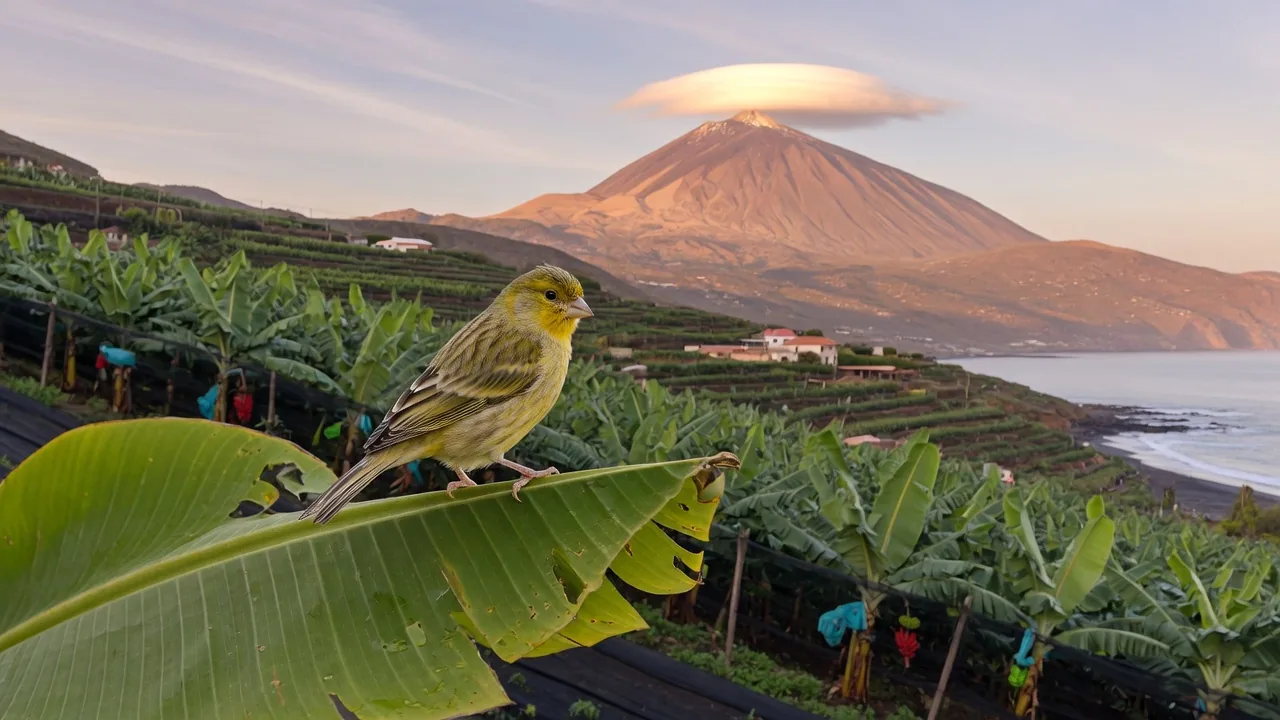
If you have been up to Teide on a cloudy day, you have already seen the thing the oldest written description of these islands bothered to mention. Snow, and cloud around it.
A Roman list, and one island called Canaria
In the first century, Pliny the Elder wrote down a report from King Juba II of Mauretania, whose sailors had gone out into the Atlantic and come back with an account of islands beyond the usual maps. Greek and Roman writers sometimes called places like these the Fortunate Islands. Pliny's list gives them separate names. One is Ninguaria, named for permanent snow and wrapped in fog. That one is usually taken to be Tenerife. The next island in the same passage is Canaria.
What Pliny says about the dogs
Canaria, he writes, held a great many dogs of a very large size. Two of them were brought back to Juba. The Latin word he is using is canis. He gives the dogs as the reason for the name.
He was writing about one island, the one we now call Gran Canaria. The name spread later to the whole group. Tenerife, Lanzarote, Fuerteventura, La Palma, La Gomera and El Hierro were not each called Canaria in that list. La Graciosa has been counted as the eighth inhabited island since 2018. The shield still shows seven.
Pliny also says those islands were full of fruit and of birds of every kind. He still named Canaria after the dogs. The birds were already there. They were not the point.
The bird took the name later
The wild bird on these islands is the Atlantic canary, a small greenish finch with streaking on the back, a little smaller than a sparrow. You can hear it in gardens, on the edge of the pine forest, and around banana plantations. It does not look like the bird printed on a packet of seed.
After the European conquest in the fifteenth century, those finches were taken to Spain and then further into Europe, mostly because the males sing. Conrad Gessner, writing in 1555, already uses a form of the island name for the bird. The clear yellow colour came later, from birds bred in captivity. The paint colour canary yellow is named after that domestic bird.
The two dogs on the coat of arms
The regional coat of arms still carries that older story. The shield has seven silver islands on blue, arranged two, two, two, and one. Above it is a royal crown and a silver ribbon with the word Océano. On either side stand two dogs. The Statute of Autonomy describes the supporters as dos canes, two dogs, in their own colour.
The Presa is a different dog
Those supporters are not a portrait of the Presa Canario. The Presa is a real breed, a heavy mastiff-type dog associated with Gran Canaria and Tenerife, used for guarding and for cattle. The modern breed comes from the islands' old livestock dogs, including the Majorero, crossed with other mastiff-type dogs brought in much later. The Fédération Cynologique Internationale recognises it.
Pliny's two sentences do not describe a breed, and two thousand years is long enough for the dogs on an island to change completely. A picture that puts a Presa next to a Roman sailor is a drawing of the idea, not a record of the animals sent to Juba.
Other explanations
Other proposals exist. Some people link the name to the Canarii, a people in north-west Africa mentioned in ancient sources. Others have suggested that Pliny's dogs were monk seals, which older writers sometimes called sea-dogs, and which used to live in these waters. Those are later readings. The sentence we have explains the name with dogs, and it says two of them were taken home. A seal is an awkward animal to put on a ship as a gift. None of these readings starts with the bird.
What you can actually notice in Tenerife
You do not need a museum for this. The regional flag, with the shield in the middle, is the institutional flag, and it hangs on public buildings. The wild finch is the part you can find without looking for a coat of arms. If a Presa is on the other side of a gate, leave it there. It is usually a guard dog, and it is not waiting to be photographed.
The name on your boarding pass is older than the resort towns. Pliny was already using it, for one island, because of the dogs. The bird inherited the name.
FAQ
Were the Canary Islands named after canaries?
No. The written explanation we have, from Pliny in the first century, derives Canaria from large dogs. The bird was named after the islands.
Which island was called Canaria?
In Pliny's list, Canaria is one island, usually identified with Gran Canaria. The name was later extended to the whole archipelago.
Did the Romans call Tenerife Ninguaria?
Pliny records an island called Ninguaria, named for snow and cloud. Because of Teide, that island is usually identified with Tenerife. He does not use the name Tenerife.
Is the Presa Canario the dog from the Roman story?
The Presa is a modern Canary Islands breed. Pliny's description is too short to identify any living breed with the dogs sent to Juba.
What does the wild canary look like?
Greenish yellow, with brown streaking, not the solid yellow of the cage bird. The yellow colour was bred in Europe.
Fact-Checking Sources
Share this article