Live status — last updated July 2026: As of early July 2026, Tenerife remains under normal volcanic monitoring status according to current official information. Recent earthquake swarms under the Teide area have been closely monitored, and official scientific bodies have stated that the available data does not indicate an increased short- or medium-term eruption risk. Always check current official sources before you travel.
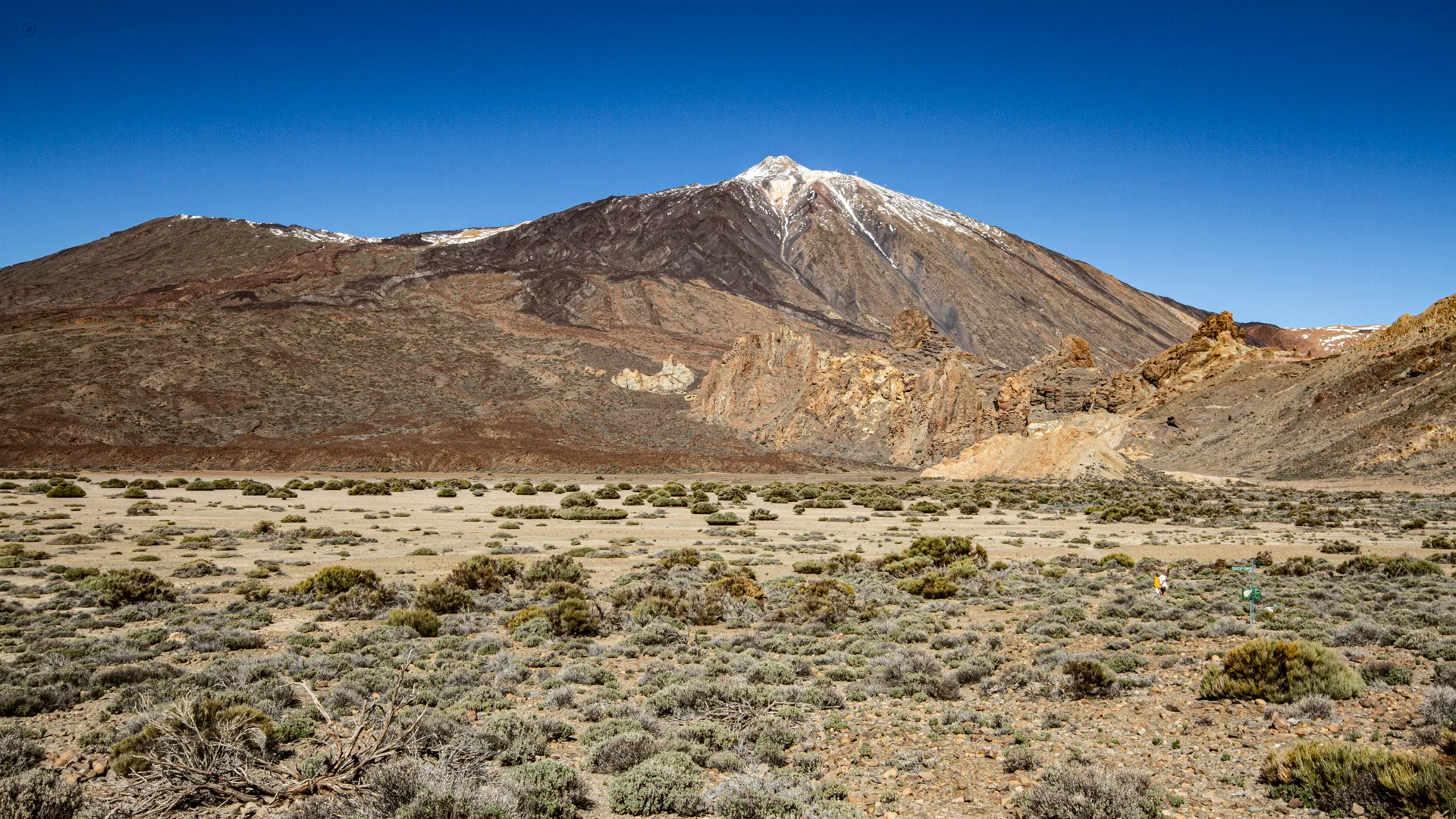
Mount Teide is one of the first things people notice when they arrive in Tenerife. It rises above the island like a giant sleeping guardian, visible from beaches, highways, villages and even from the plane before landing.
And because Teide is a volcano, one question comes up again and again: will Mount Teide erupt?
It is a dramatic question, and yes, people genuinely search for it, especially during periods when small earthquake swarms appear in the news. But the honest answer is more interesting than panic. Tenerife is an active volcanic island, and it is monitored closely. That is not the same as an eruption being around the corner.
Scientists track the volcano's signals in real time, and the latest official information at the time of writing does not point to an imminent eruption. So let us separate the facts from the fear.
Is Mount Teide an Active Volcano?
Yes. Teide is an active volcano, and Tenerife itself was built by volcanic activity.
The landscapes around Teide National Park — lava fields, black rock, red volcanic soil, craters, cones and surreal formations — are the clearest reminders of that origin. It is one of the reasons the park is such a popular excursion.
But active does not mean about to erupt.
A volcano is classed as active if it has erupted in the recent geological past and could erupt again. In human terms, that can sound alarming. In geological terms, "again" might mean centuries away.
Before any serious volcanic emergency, scientists look for specific warning signs building together: stronger and shallower earthquakes, magma moving toward the surface, ground swelling and changing gas output. Those are the signals that matter, and they are exactly what the monitoring network exists to detect.
When Did Teide Last Erupt?
The last eruption on Tenerife was the Chinyero eruption, which began on 18 November 1909 and lasted about 10 days. It happened on the northwest flank of the island, outside what is now the national park, and it caused no deaths.
Two earlier historical eruptions are worth knowing:
- Garachico, also known as Montaña Negra, began on 5 May 1706 and destroyed the town's port.
- Chahorra, also known as Narices del Teide or Pico Viejo, ran from 9 June to 8 September 1798 and is the only historical eruption inside today's national park boundaries.
This history tells you two things at once:
- Tenerife is a genuinely volcanic island with real geological activity.
- Eruptions are rare events, separated by decades or centuries, not something a visitor should expect during a one-week holiday.
Many of the places tourists visit today — Teide, Pico Viejo, Garachico, Santiago del Teide, Masca, Los Gigantes and the lava-shaped coastlines — exist because of these processes over thousands of years. That is exactly what makes Tenerife so visually powerful.
Are the Recent Earthquakes Under Teide Dangerous?
Here is where honesty matters more than a comforting headline. Tenerife does experience earthquake swarms, and in recent years some of those swarms have attracted public attention.
Scientists have tracked changes in seismic, ground-deformation and gas signals under Tenerife for years, with periods of closer attention when swarms become more frequent. Through 2026, several clusters of small earthquakes have been reported under or near the Teide volcanic system.
So why are scientists not sounding the alarm?
The Energy Matters More Than the Headline Count
A swarm can contain many tiny events without meaning that magma is about to reach the surface. The size, depth, location, duration and accompanying signals all matter.
More recorded micro-earthquakes can sound frightening, but a larger number of low-energy events is not the same as a clear eruption warning.
The Key Escalation Signals Are Not Currently Confirmed
The signals that would truly worry a volcanologist include strong and increasingly shallow earthquakes, significant ground deformation and abnormal gas changes that point to magma moving upward.
At the time of writing, current official information does not confirm that combination of warning signs, and scientific communications have stated that the recent activity does not increase the short- or medium-term eruption risk.
Modern Monitoring Hears More Than Older Equipment Did
Tenerife is monitored much more intensively today than in the past. Sensitive modern instruments can detect micro-tremors that older networks would have missed.
That does not mean every increase is just a measurement effect. It does mean the island is being listened to more carefully than ever.
The practical takeaway for visitors is simple: the monitoring is serious, the volcanic system is active, and the current official risk message remains reassuring.
Is It Safe to Visit Mount Teide?
Yes, visiting Teide is generally safe when you follow official guidance, road conditions, weather warnings and park rules.
Teide National Park is one of Tenerife's top natural attractions, visited for day tours, sunset tours, stargazing, the cable car, hiking and photography.
For nearly all visitors, the practical risks have nothing to do with eruptions. The real hazards are far more ordinary: altitude, sun exposure, cold and wind near the summit, winter road closures and changing mountain weather.
Teide is the highest peak in Spain at 3,715 metres, and conditions up top can feel like a different world from the coast. You can leave Costa Adeje in sunshine and reach the volcano in cold wind, cloud or even snow.
Bring layers, water, comfortable shoes and sun protection. If you would rather not drive the mountain roads, a guided tour handles the logistics for you.
Why Do People Search Will Teide Erupt?
Because volcanoes create emotion. They are beautiful, dangerous, ancient and mysterious all at once.
Teide is not just a mountain. It is the heart of Tenerife's landscape.
When people search this question, they usually want to know:
- Is Tenerife safe to visit?
- Is Teide still active?
- Could there be an eruption like La Palma in 2021?
- Are the recent earthquakes in Tenerife normal?
- Can I still visit Teide National Park?
- Is it safe to book a Teide tour?
All fair questions, and all with reassuring answers based on current official information.
Could Tenerife Have Another Eruption One Day?
Yes. Tenerife is a volcanic island, so a future eruption somewhere on it is possible. That is simply the nature of volcanic islands.
Long-term probability models sometimes sound dramatic when quoted without context. A multi-decade probability for a whole island is not a forecast for your holiday week, and it is not the same as an imminent event.
Crucially, possible one day is not the same as happening soon.
Monitoring in the Canary Islands today is far more advanced than during any historical eruption. Seismicity, gases and ground deformation are watched continuously, supported by the Canary Islands volcanic-risk emergency planning system.
In other words: Tenerife is volcanic, but it is not unmanaged. The responsible approach for visitors is simple: follow official information, ignore sensational headlines and enjoy the island with awareness rather than fear.
Why Teide Is Still One of the Best Excursions in Tenerife
Here is the irony: the same volcanic energy people worry about is exactly what makes Teide unforgettable.
Without volcanoes, there would be no lunar landscapes, no black lava fields, no dramatic cliffs, no natural lava pools, no volcanic vineyards and no giant Teide dominating the skyline.
A Teide excursion is not just a trip to a volcano. It is a journey through the origin of the island.
On a good visit you can experience:
- Pine forests above the clouds
- Lava fields that look like Mars
- Roques de García and other volcanic rock formations
- Views over neighbouring islands on clear days
- Sunset above the sea of clouds
- One of the clearest night skies in Europe
- The feeling of standing inside a living geological story
That is why Teide remains a must-do.
Best Ways to Experience Teide
Teide day tour: ideal for seeing the volcanic landscapes and viewpoints without driving yourself.
Teide sunset tour: one of the most beautiful options, as the rock turns gold, red and purple in the evening light.
Teide stargazing: away from coastal lights, the sky becomes incredibly clear. For many visitors, this is the single most memorable moment of the holiday.
Teide cable car: the easiest way to feel the scale of the volcano without a long hike. Weather can affect operation, so check before you go.
Buggy or quad routes near Teide: for the adrenaline crowd, combining mountain roads, views and adventure.
Final Answer: Will Teide Erupt?
One day, Tenerife may have another eruption somewhere on the island. That is the nature of volcanic islands.
But based on the latest official information at the time of writing, there is no confirmed sign that Mount Teide is about to erupt imminently.
The recent earthquake swarms have been monitored closely, the key escalation signals are not currently confirmed, and official communications continue to frame the current short- and medium-term risk as not increased.
For visitors, the best approach is simple:
- Respect the mountain.
- Follow official information.
- Do not believe every dramatic headline.
- Come prepared for altitude and changing weather.
- Take time to understand what you are really seeing.
Because Teide is not just a volcano. It is the story of Tenerife itself.
FAQ
Is Mount Teide going to erupt soon?
Current official information does not indicate an imminent eruption. The recent low-energy earthquake swarms have been closely monitored, but the warning signs expected before an eruption are not currently confirmed together.
Is Tenerife safe to visit?
Yes. Tenerife remains a major tourist destination, and Teide National Park is normally open unless authorities announce specific restrictions for weather, roads or safety.
Why are there so many earthquakes in Tenerife?
Tenerife is an active volcanic island with a sensitive modern monitoring network. Small earthquake swarms can be linked to deep volcanic or hydrothermal processes, but they do not automatically mean an eruption is imminent.
When did Teide last erupt?
The last eruption on Tenerife was Chinyero in 1909, beginning on 18 November and lasting about 10 days. Earlier historical eruptions include Garachico in 1706 and Chahorra or Pico Viejo in 1798.
Can you visit Teide National Park?
Yes. You can go by rental car, guided day tour, sunset tour, stargazing experience, cable car or selected adventure routes.
What is the best Teide excursion for first-time visitors?
A guided day tour or a combined sunset-and-stargazing tour is usually the easiest option. You get the key viewpoints with less stress around driving, parking and mountain conditions.
Fact-Checking Sources
- Instituto Geográfico Nacional volcanic monitoring updates
- Canary Islands government scientific committee note on Tenerife seismic activity
- Recent Involcan reporting on the July 2026 Tenerife swarm
- UNESCO World Heritage Centre listing for Teide National Park
This article was last updated in July 2026. Volcanic monitoring data changes frequently, so always check current IGN, Involcan and Canary Islands government bulletins before travelling.
Share this article